Active Research Projects
Role of clock genes in neuronal development and morphology
The proper wiring of neuronal circuits during development is essential for the neuronal control of behavior. Across animal species, sleep/wake cycle rhythms, as well as many other behavioral and physiological rhythms, are controlled by the circadian timekeeping system, a network of neurons that maintains endogenous molecular oscillations and rhythmic behavior with a ~24 hour period. The proper functioning of this circadian network requires the formation of synaptic and peptidergic connections during development.
Sex Differences in the Circadian System
A growing body of evidence indicates significant sex differences in the circadian system, but little is known about how temporal organization of physiology and behavior differs between sexes. Drosophila is a powerful model system in which to study the neuronal basis of sexual dimorphism in timekeeping thanks to its well-characterized circadian clock neuron network and a highly conserved molecular oscillator.
News
We are moving to Bloomington!
In August 2024, our lab will be relocating to the Department of Biology at Indiana University.
Our new lab website is coming soon!
Please note that the current website will not be updated after Summer 2024.
Grace received the SRBR Excellence in Research Award
Congratulations, Grace!
SRBR 2024
Grace, Eva, and Aishwarya presented posters during the SRBR 2024 meeting in San Juan, Puerto Rico.
Photos
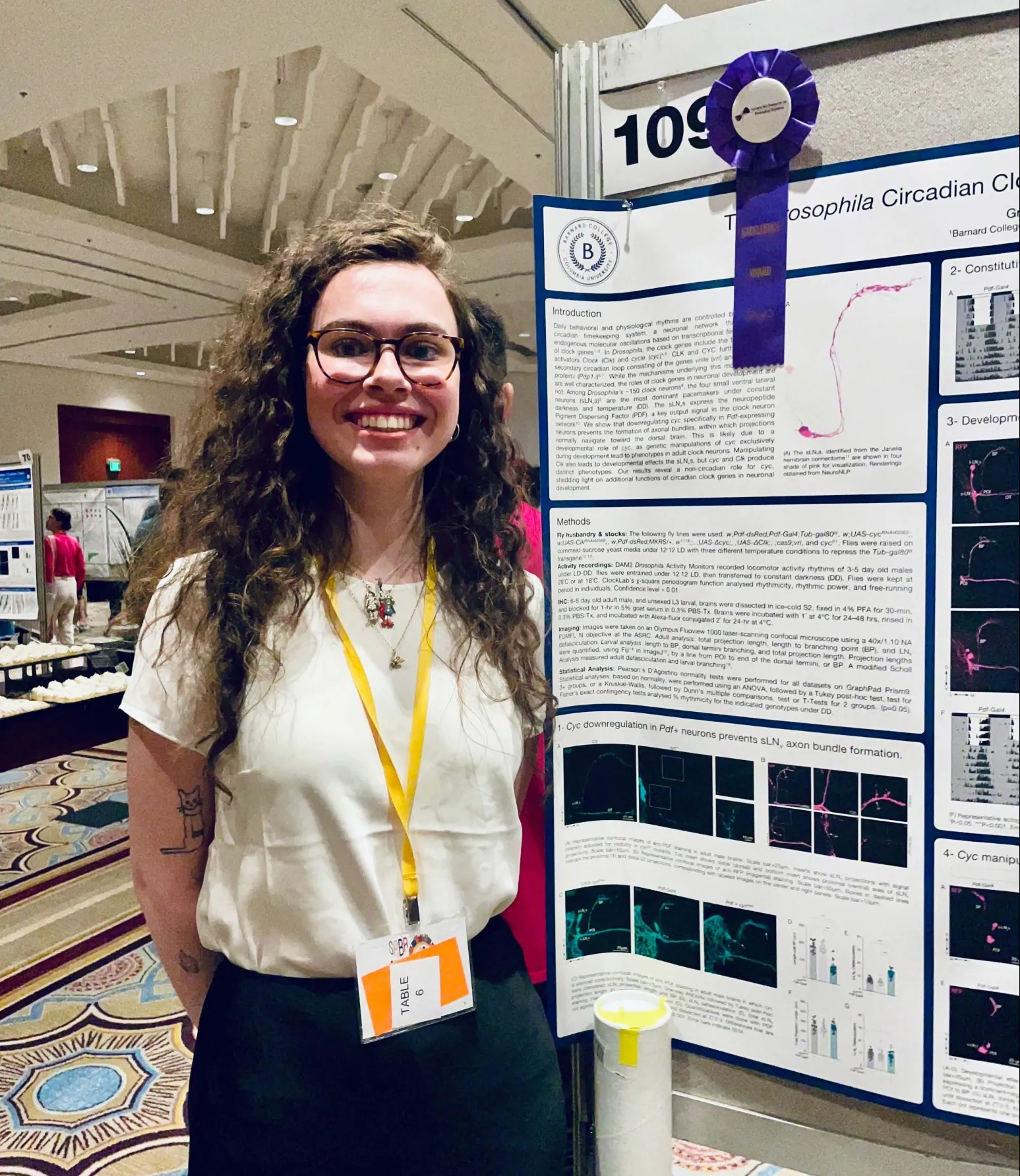
Grace SRBR Excellence in Research Award 2024

SRBR 2024
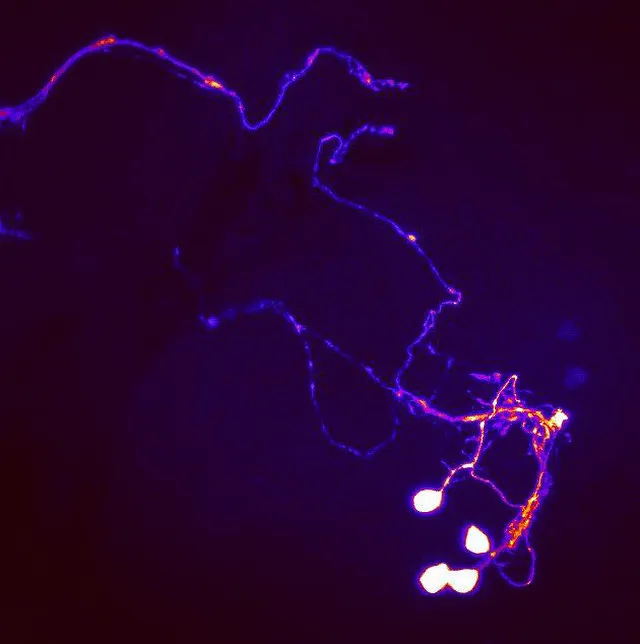
L3 sLNv misrouting